What fast cars and good machines taught me about product craft
Jaimin Mehta on cars, bikes and well-built machines, and what their engineering teaches a founder about product craft, honest trade-offs and finish.
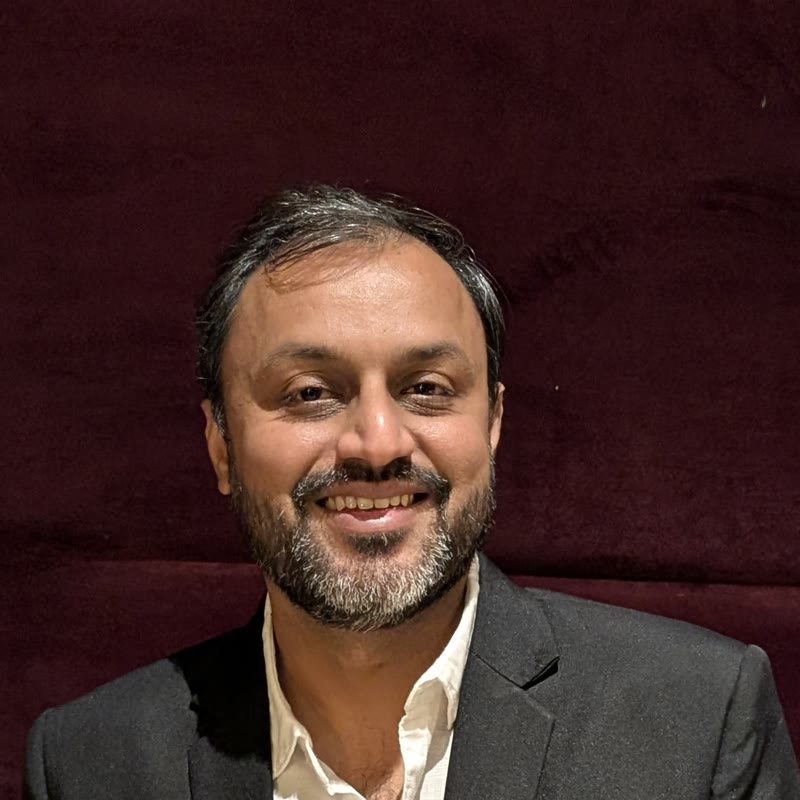
There is a photo of me from 2014 on a red Bajaj Avenger. It is not a dramatic photo. But I like it, because it reminds me that I have always cared about machines: how they are built, how they feel, and why some of them just work.
If you searched for Jaimin Mehta cars, this is not a garage tour. It is about what fast cars, good bikes and well-built machines in general have taught me about building software, and about building Bolo Media.
Jaimin Mehta, cars and the bikes in between
I am a software person. I have spent more than 17 years writing code, leading mobile projects and managing technical teams. Still, some of the clearest lessons about craft that I know of come from machines, not apps.
A machine can't hide much. If a car is badly balanced, you feel it in the first corner. If a bike's seat is wrong, you know within twenty minutes. Software can hide its flaws behind loading spinners and update notes for a long time. Machines are more honest, and that honesty is a good teacher.
The Avenger and the idea of a clear purpose
The Bajaj Avenger is a cruiser. It has a low seat, a relaxed riding position with your feet forward, and it is built for comfort on long, steady rides rather than for speed through traffic. It does not try to be a sports bike. It does not try to be an off-roader.
That is the first lesson: a good product knows what it is for.
Every machine is a set of trade-offs. A low seat makes a bike easier to handle at a standstill and comfortable over distance, but it limits how far you can lean in a corner. Designers who choose a cruiser layout accept that on purpose. The result is a machine that is very good at one kind of ride.
Software teams struggle with this more than vehicle makers do. It is tempting to add every feature a customer asks for, until the product does many things and none of them well. When I think about Bolo, I try to ask the cruiser question: what kind of ride is this for? For Bolo, the answer is a small or local business that needs a ready-to-post video ad in Gujarati or Hindi, quickly, without a studio. Anything that does not serve that ride has to justify itself.
What fast cars get right
Fast cars are easy to admire for the wrong reasons. The headline number, the top speed or the 0 to 100 time, is the least interesting thing about them.
What makes a great performance car is how all the parts agree with each other. Engine, gearbox, brakes, suspension, steering, tyres and seat all have to work as one system. A powerful engine in a car with weak brakes is not fast. It is dangerous.
Balance beats a big number
There is a well-known example from car design: the McLaren F1 of the 1990s put the driver in the centre of the car, with a passenger seat slightly behind on each side. It was an unusual choice, made because it gave the driver a better, more balanced position. The designers cared about the experience of driving more than about a convention.
Products work the same way. A product with one brilliant feature and five clumsy ones feels worse than a product where everything is simply good. For an AI video product, a beautiful visual with a voice that sounds wrong is a failed ad. The parts have to agree.
Iteration over reinvention
The Porsche 911 has kept its basic rear-engine layout for about six decades. Each generation has been refined, not thrown away. The engineers kept the core idea and kept fixing what was weak about it.
I find that reassuring as a founder. You don't need to reinvent your product every few months. You need a sound core idea, and then the discipline to keep improving the weak parts, one generation at a time.
Craft is in the parts nobody photographs
People photograph the outside of a car. Engineers know the craft is often in the parts you never see: the way a wiring loom is routed, the way a bolt is placed so a mechanic can reach it, the way a door closes with the right sound.
Software has the same hidden layer. Error messages. What happens when the internet drops halfway through an upload. How long the user waits, and whether you tell them why. Nobody puts these in a launch post, but they decide whether a product feels well built or cheap.
My years as a developer and later as a project manager taught me that this hidden layer is where most of the real work is. It is also where most teams cut corners, because nobody claps for it. Good machines are a reminder that people feel it anyway, even if they can't name it.
Respect the person using it
A machine is built around a human body. Seats, pedals, handlebars and switches are placed for real hands and feet. The best designs feel obvious because someone spent a long time making them obvious.
For Bolo, the "body" is a shop owner with a phone, a product photo and very little time. Every extra screen, every confusing word, every unnecessary choice is like a switch placed where the hand can't reach. Product craft, for us, means building around that person, not around what is technically impressive.
What I take from all this
I don't think you need to love cars or bikes to build good software. But I do think machines are one of the clearest ways to see what craft means:
- Know what the product is for, like a cruiser knows it is a cruiser.
- Make the parts agree. One great feature can't carry weak ones.
- Refine the core instead of starting over every season.
- Care about the hidden layer, because users feel it.
- Build around the human, not the spec sheet.
Some of these lessons came to me through machines, and some through years of shipping software. I wrote about one side of that journey in from Android developer to founder, and about why I left a stable job to build something of my own in why I left a stable job in 2026 to start Bolo.
The red Avenger in that 2014 photo was not a fast machine. But it was an honest one, built for one kind of ride and good at it. That is still roughly what I am trying to build, just in software.
Jaimin Mehta
Entrepreneur with 17+ years in tech, building Bolo Media: helping small businesses advertise like big brands with the help of AI.