Why I left a stable job in 2026 to start Bolo
Leaving a job to start a startup in India is a serious call. Why I left a stable role at Vagaro in 2026 to build Bolo Media, and the doubts worth weighing.
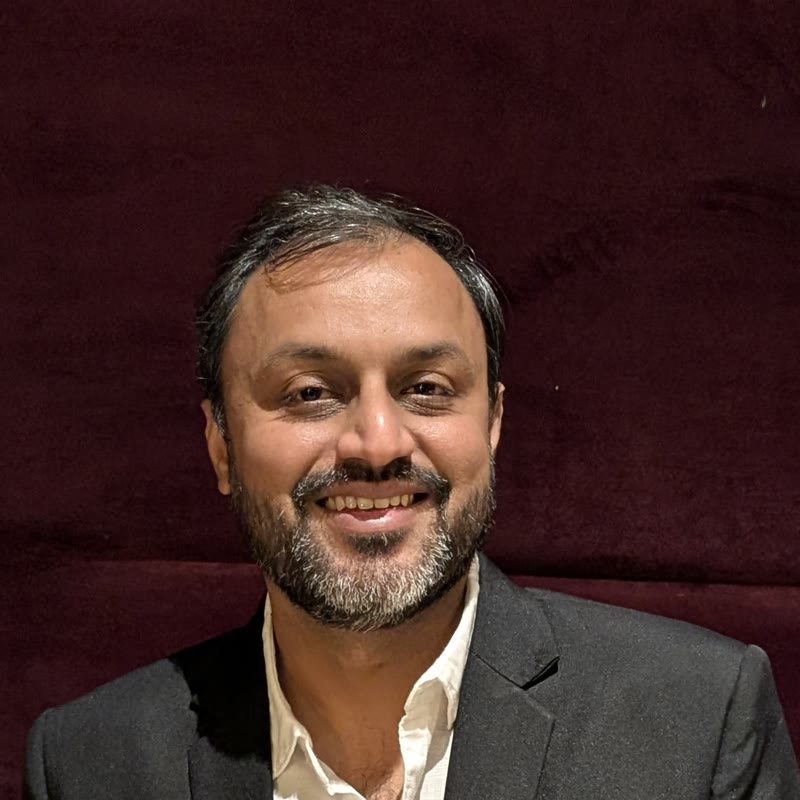
In 2026 I left a stable job as a Technical Project Manager at Vagaro to build Bolo Media full time. On paper it was not an obvious move. I had spent more than 17 years in tech, six of them at a global company, and the path ahead was clear and comfortable.
People ask about leaving a job to start a startup in India as if it is one big brave moment. It isn't. It is a long list of small, practical questions, and you have to answer each one honestly before the big one makes sense.
What a stable job actually gives you
I want to be fair to the job first, because a lot of founder writing is unfair to it.
A good job gives you a salary that arrives on a fixed date. It gives you colleagues who know more than you about some things. It gives you a structure: someone else has decided what matters this quarter, and your job is to deliver it well. At Vagaro I worked on software used by salons and spas around the world. That is real work with real users, and I learnt a great deal from it.
It also gives you something less visible: permission to switch off. When the day ends, the problem belongs to the company, not to you alone.
So the question was never "is a job bad?" It was "is there something I can only do outside it?"
The case for leaving
My career has been a slow climb through the layers of building software. I started as an Android developer in 2009, moved through developer and senior developer roles in Ahmedabad, spent nine years at Silver Touch Technologies as an Assistant Project Lead and Mobile Engineer, and then six years managing projects at Vagaro. Each move taught me a different part of the job: writing code, leading people, shipping to customers.
What I had not done was own the whole thing. The problem, the product, the risk, the result.
And I had a problem I could not stop thinking about. Small and local businesses in India, especially those that speak Gujarati and Hindi first, rarely make video ads. Not because they don't want customers, but because a studio or an agency is out of reach. AI had reached a point where a product photo or a few lines of text could become a ready-to-post video with a natural voice in their own language. That felt like a door that had just opened, and doors like that don't stay open for long.
You can build something like that on weekends for a while. But at some point a side project either becomes the main thing or it quietly dies. I did not want it to die.
I wrote more about the product itself in why I'm building Bolo Media.
The doubts any founder in my position has to weigh
Here is where I want to be honest without pretending to give you a neat formula. These are the questions that anyone leaving a long, stable career has to sit with. I don't think you can skip any of them.
Can I live without the salary for long enough?
Not "can I survive a month", but "can I survive the time it realistically takes for this to work, and then some more". Most plans are too optimistic about time. A useful exercise is to take your honest estimate and double it, then ask whether you can still sleep at night.
Who else carries this risk?
In India, a career decision is rarely just yours. Parents, a spouse, children, sometimes a wider family all feel the effect. Leaving a job is easier when the people closest to you understand what you are doing and why. It is worth having that conversation properly, early, and not as an announcement.
Am I running towards something, or away from something?
A tiring job is a bad reason to start a company. A company is far more tiring. The test I find useful is this: if the job suddenly became perfect tomorrow, would I still want to build this? If yes, the reason is the problem, not the escape.
Is my experience actually useful here?
Seventeen years in tech is an advantage, but not in the way people assume. It does not mean you know the market. It means you know how software gets built, how projects slip, and how to keep a team pointed at one goal. Those things matter. But a founder also has to sell, price, talk to customers and make decisions with incomplete information. I wrote about that shift in what I had to unlearn going from project manager to founder.
What does failure look like, really?
This one helped me most. When you write down the worst realistic outcome, it is usually less dramatic than the fear. For an experienced engineer and manager, the worst case is often "I go back to a job, a little older and a lot wiser". That is not a disaster. Naming it plainly takes away much of its power.
Why 2026 and not earlier
People sometimes ask why I didn't do this years ago. The honest answer is that the thing I am building could not have been built well years ago.
Natural-sounding voices in Gujarati and Hindi, video generated from a single photo, presenters that can speak a script: these became good enough only recently. Starting earlier would have meant building a worse version of the idea, or a different company altogether.
There is also a quieter point about timing. Years as a project manager build a habit worth keeping: finish what you start, and leave things in order. Whenever you go, it is better to leave properly than to drift out while your mind is already elsewhere.
What I would tell someone thinking about it
I am not going to tell you to quit. Plenty of people should not, and plenty of good ideas are better built inside a company or as a side project.
But if you are weighing it, a few things are worth doing first:
- Write the problem down in one sentence. If you can't, you are not ready to leave for it.
- Test the core assumption cheaply. Before resigning, prove the one thing the whole plan rests on. A small test that could fail is worth more than a big plan that can't.
- Talk to the people who share the risk. Properly, and before you decide, not after.
- Decide what "stop" looks like. Set a point at which you would honestly walk away. It makes it easier to keep going until then.
- Respect the job you are leaving. You will need the people there more than you think, as advisers, as references, maybe as customers.
Where things stand
I am still early. Bolo Media is the work now, and the questions above have not gone away. They have just changed shape: from "should I leave?" to "is this working, and what do I change next?"
I don't think leaving was brave. I think it was a decision I had thought about long enough that staying had started to feel like the riskier choice. If you are at the same point, take your time with the questions. The answer will be clearer than you expect.
Jaimin Mehta
Entrepreneur with 17+ years in tech, building Bolo Media: helping small businesses advertise like big brands with the help of AI.